Toen we in 2011 naar Mali vertrokken, harden we een deel van een container naar Senegal gehuurd, die van daar naar Bamako, de hoofdstad van Mali werd vervoerd. Eén van de dingen daarin waren 13 computers (plus voor elk een flat screen, azerty toetsenborden en muis), die we, net voor we vertrokken, aan Willem Snapper in bewaring hebben gegeven. Hij is zelf een computer specialist, in de buurt van Mopti, zo’n 400 km ten noorden,.
Het ziet er nu naar uit dat deze computers tenslotte ook nuttig gebruikt gaan worden: er is een verzoek in Sevaré, in de buurt van Mopti, waar Willem woont, om een internet café te openen. Met de hulp van onze computers, en Willem die een oogje in het zeil houdt, lijkt dit nu een project dat realiteit kan worden.
The new internet café in Sokoura (Sévaré, Mopti)
Dit is een belangrijke ontwikkeling, want het internet geeft de mensen hier een venter op de wergeld buiten hun directe omgeving. Willem en de jongeren die hierom verzochten hebben nu een locatie gevonden die heel aantrekkelijk is, omdat het lokaal recht tegenover het gebouw van de onderwijzers-opleiding ligt. En de Stichting Dogononderwijs heeft een daadwerkelijke bijdrage geleverd, door het nodige meubilair ter beschikking te stellen.
The boys from the Dogon donating the furniture for the internet café
Natuurlijk blijft er nog een budgettair gat te dichten, dat Willem bereid is voor te schieten, zo dat het internet café hopelijk in januari 2013 van start kan gaan.
Het belangrijkste echter, is dat (naar we hopen) scholen of opleidingen (vooral onderwijzers-opleidingen) in het Westen in contact zouden komen met de Malinese studenten in Sévaré. Mimi heeft al contacten met scholen hier in Antwerpen gelegd, en we hopen dat anderen zich bij dit project kunnen voegen – omdat het een unieke gelegenheid biedt om leeftijdsgenoten uit een totaal vreemd land (en continent) te leren kennen. Mocht je dus mensen of instellingen kennen die interesse kunnen hebben, laat het ons dan graag weten!
When we went to Mali in 2011, we had rented part of a container that was shipped to Senegal and transported from there to Bamako, Mali’s capital. One of the things in it were 13 computers (plus for each PC a flat screen, an AZERTY keyboard and a mouse), which just before leaving the country, we handed over to Willem Snapper, himself a computer specialist, near Mopti, some 400 km North.
It now looks as if these computers are finally being of use: there has been a request in Sévaré, near Mopti, where Willem is based, to open up a cyber café, and with the help of our computers, and Willem’s keeping an eye on the process, this is now becoming a reality.
The new internet café in Sokoura (Sévaré, Mopti)
This is important, because the internet provides local people with a contact to the world outside Mali. Willem and the youngsters requesting help have now found a place, which is especially favorable, as it is located directly in front of the teacher training college. And the Stichting Dogononderwijs [Yes, it has a Dutch name!] has contributed by acquiring the necessary furniture for the internet café.
The boys from the Dogon donating the furniture for the internet café
Of course there remains still a budgetary gap, which Willem is prepared to advance, so that the cyber café can become operational in January 2013.
The most important thing, however, would be if schools or training institutes (especially for school teachers) could interact with the students in Sevaré. Mimi has already contacted some schools, and we hope that others may join the project in exchanging emails with students in Mali – a unique opportunity to get to learn students from a country (and continent) all too little present in our consciousness. So if you know of anyone (or any institution) interested, please contact us!
Je hebt ongetwijfeld gemerkt dat het op onze website de laatste maanden uiterst stil is geweest. De reden daarvoor is eenvoudig: er was gewoon weinig te berichten. Onze Malinese partner, Souleymane, die hoofdzakelijk leefde van de verkoop van zijn zelf ontworpen stoffen aan toeristen, kreeg het bijzonder moeilijk wanneer die toeristen (voordien zo’n 150.000 op jaarbasis), als gevolg van de politieke instabiliteit, definitief wegbleven. Met zo’n 20 personeelsleden die voor hem werkten in zijn centrum (zie foto), betekende dit niet slechts een bedreiging voor hemzelf, maar ook voor 20 verdere families.
Workers at the Soroble Centre, Ségou
Gallery with artworks at Soroble Centre, Ségou
Daarop nam Souleymane de moedige beslissing om – wanneer het Westen niet meer naar Mali komt – hij zelf naar Europa moest. Nu, na zo’n 6 maanden, en meerdere hoogst succesvolle contacten, is hij weer in Segou, en zeer regelmatig in ‘ons’ dorp Fintiguila. Niet slechts op bezoek, maar om de levenssituatie van de dorpsbewoners te verbeteren. Het belangrijkste dat hij sinds kort in dit opzicht wist te verwezenlijken is de bouw van een 40 meter hoge watertoren.
Constructing the water tower
Working at the water tower
Een krachtige pomp vult het reservoir met water uit de rivier,
Taking the hose to mid-river
Pumping the water from the river to the water tower
Water for life
dat dan door een aantal kanaaltjes naar de groentetuintjes wordt geleid.
Digging the irrigation canals
Waiting for the water
Dit alles leidt tot de uitbouw van een irrigatiesysteem voor de tuinen, wat voor de bevloeiing van de groenten zorgt, en de vrouwen ontlast van zware lichamelijke arbeid die ze anders elke dag moeten verrichten.
The beginning of an irrigation system
Souleymane and village chief before the pump
We denken eraan, een systeem met druppel-bevloeiing te ontwikkelen, wat nog meer water zou sparen, en een maximale toevoer van water voor elke individuele plant zou verzekeren, maar we hebben in dit opzicht nog weinig vooruitgang geboekt. Maar wanneer het irrigatie-systeem eenmaal werkt, is de mogelijkheid gegeven dat de vrouwen meerdere oogsten per jaar kunnen kweken. En het opent ook de mogelijkheid om de tuinen van thans 1 ha naar 2 ha uit te breiden.
Verder, en zeer tot onze opluchting, loopt het school-project verder, ondanks het feit dat we het op dit moment niet kunnen bezoeken (het risico voor onze veiligheid is te hoog). Maar we zijn in regelmatig contact met Souleymane en zijn vrouw Nadie. De tweede klas is in oktober van start gegaan, en een nieuwe onderwijzeres is ons team in het dorp komen versterken, zodat de kinderen elke dag naar school kunnen. We zijn vastbesloten om onze steun aan het dorp verder te zetten, zij het voorlopig vanop afstand, en met de hulp van onze Malinese vrienden.
Intussen hebben we ook goed nieuws over de moringa plant (zie elders op deze website: onder PROJECTS –> MORINGA): het poeder van zijn fijn gemalen bladeren heeft het leven gered van één van van kleintjes van de tweeling. De algemene kenmerken van deze plant voor zijn uitzonderlijke voedingswaarde en geneeskrachtige werking wordt ondertussen onderkend. Zo ook in ons dorp, waar Souleymane een plantage moringa bomen wil beginnen, in de allereerste plaats voor het gebruik ervan door de mensen in het dorp (vooral moeders en kinderen), later misschien ook voor de verkoop en mogelijk ook de export.You certainly have noticed that for several months now there was no news about our project in the village of Fintiguila on this website. The reason for this is simple: not much worth reporting was happening. Our Malian partner, Souleymane, who lived mainly from selling his self-designed textiles to tourists, faced a serious impediment when, as a result of the political volatility in the country, the stream of tourists (some 150,000 visitors in its heyday) dried up. With some 20 people employed in his workshop (see photo), this was threatening not just himself, but several families’ existence as well.
Workers at the Soroble Centre, SégouGallery with artworks at Soroble Centre, Ségou
He then took the courageous decision to go to Europe and sell his products there: if Europe doesn’t come to Mali, he may have thought, I will go to Europe. Now, after some six months, and several highly successful contacts, Souleymane is back in Segou, and visiting the village on a very regular basis again. Not only just visiting, but actually getting involved in improving the local situation. The most important thing to mention in this respect is the water tower he constructed.
Constructing the water towerWorking at the water tower
A powerful pump fills the reservoir of the water tower,
Taking the hose to mid-river
Pumping the water from the river to the water tower
Water for life
which is then led through pipes to the women’s vegetable gardens.
Digging the irrigation canals
Waiting for the water
He is thus in the act of constructing an irrigation system for the gardens, which will secure water for the plants, and relieve the women from a strenuous task they otherwise would still have to perform every day.
The beginning of an irrigation systemSouleymane and village chief before the pump
We are thinking of developing a drip irrigation system, which would save even more water, and ensure maximum water for each singular plant, but we haven’t made any progress in this respect yet. But when the irrigation system is in place, the possibility of having several harvests a year becomes a possibility. It will also create the possibility of extending the gardens’ surface with another one or two acres.
Furthermore, and maybe much to your relief, our school project continues – despite the fact that we cannot visit it at the moment (the risks for our safety we consider too large). But we are in very regular contact with Souleymane and Nadie. The second grade has started in October, and a new female teacher has joined the team. So the children still go to school every day. We are determined to continue our support, albeit from a distance, and with the help of our Malian friends.
Meanwhile, we also have good news about the moringa plant (see elsewhere on this website under PROJECTS –> MORINGA): the powder from its rubbed leaves saved the life of two (twin) babies. The general characteristics of this plant for extraordinary nutritious and medicinal purposes is now on its way to be well recognized. Also in our village, where Souleymane is about to start a plantation of moringa trees, first and foremost for the villagers’ (especially the mothers’ and children’s) own degustation, later perhaps also for export.
We zijn de laatste tijd niet erg actief geweest op onze website. De reden hiervoor was de chaotische situatie in het land, waar vrijwel niemand wist wat er gebeurde, and vooral omdat absoluut niemand de verdere ontwikkeling kon voorspellen. Nu, meerdere maanden later ziet de situatie er ‚stabiel’ uit in zijn instabiliteit… Maar er zijn ook belangrijke nieuwe ontwikkelingen in onze projecten (waarover in een aparte bijdrage meer), zodat op de website vanaf nu weer regelmatig nieuwe bijdragen te zien zullen zijn.
Vrienden vragen ons regelatig hoe de situatie in Mali nu is – men heeft iets gelezen of gehoord in de media – meestal over de moeilijkheden die het land teisteren, maar wat er nu precies aan de hand is, ontsnapt hen. In wat volgt, proberen we een beschrijving van de huidige situatie te leveren. (In werkelijkheid is de zaak ingewikkelder, maar voor de duidelijkheid beperken we ons tot de hoofdlijnen.)
Wanneer men de situatie in Mali nu in slechts enkele zinnen zou willen samenvatten, komt er ongeveer zo iets uit:
– Islamistische groepen hebben het noorden van het land veroverd, en hebben een extreme (zeg maar barbaarse) vorm van Islamistische sharia ingevoerd, een vorm die volledig vreemd is aan de zeer liberale vorm van de Islam die in Mali beoefend wordt. Tegelijk gebruiken deze groepen dit veroverde gebied als een veilig oord waar ze trainingscampen voor Jihad-strijders van Al-Qaeda opleiden;
– De omverwerping van de democratische regering in het zuiden door een groepje officieren van lagere rang.
Het begon allemaal in 2011, toen het Qaddafi regime in Libyë viel. Het Lybische leger had een contingent van Toeareg soldaten in dienst, die door de jaren heen geduchte krijgers met oorlogservaring werden. Na de val van Qaddafi keerden deze jonge Toeareg krijgers terug naar hun thuishaven in het Noorden van Mali, mét natuurlijk hun uitrusting (b.v. 4×4 jeeps) en hun moderne (ten dele zware) wapens. Ze waren nu zonder inkomen, maar droegen in zich nog het oude verlangen naar een eigen, onafhankelijke Toeareg staat (die ze Azawad noemen). Gezien hun oorlogservaring en hun moderne wapens geloofden ze dat de tijd rijp was om een rebellie tegen de regering van Mali in het zuiden te beginnen. (Er zit ook een racistisch trekje in dit verlangen: in het verleden hadden de Toeareg – die in het algemeen licht- tot donkerhuidig, maar niet zwart zijn – ze zijn uiteindelijk Berbers – zwarte slaven uit het zuiden in dienst, terwijl de rollen nu omgekeerd zijn: ze worden nu geregeerd door zwarten uit het zuiden, die ze nog steeds beschouwen als hun eertijdse slaven, wat allerlei racistische gevoelens in ze oproept.)
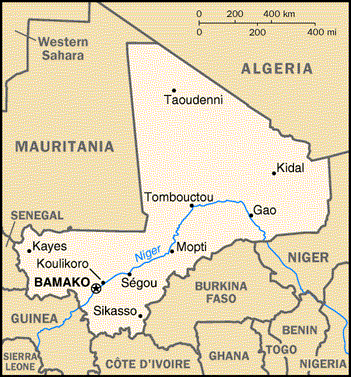
Het Malinese leger werd volledig verrast – ook omdat de soldaten nooit aan een gewapend conflict hadden gedach: je gaat in het leger vanwege het vaste inkomen en het pensioen, niet om te vechten. Bovendien was dit leger onderbemand, extreem slecht getrained, bewapend en gemotiveerd, en dus niet opgewassen tegen die ervaren Toeareg rebellen. Na eerste schermutselingen, waarin Toeareg krijgers enig territorium veroverden, gebeurde in maart 2012 een tweede catastrophe: een coup d’état door een kleine groep militairen, die de zittende president, Amadou Toumani Touré (ATT in de volksmond) aan de kant zette, een maand voor de presidentiële verkiezingen (waarin ATT geen kandidaat was!) Het motief dat door de muiters werd aangehaald, was dat de president niet genoeg had gedaan om de Toeareg rebellie in het noorden te stoppen. Maar de staatsgreep had een averechts effect: het machtsvacuum in de hoofdstad dat door de staatsgreep was ontstaan (en de interne machtsstrijd binnen het leger zelf), gaf de Toeareg rebellen de gelegenheid om bijna de helft van het territorium van Mali te veroveren en nu te heersen over een uitgestrekte regio (van vooral woestijn) zo groot als Frankrijk. De kaart hieronder laat de situatie duidelijk zien. De regering heeft geen enkele greep op dit gebied of op de huidige situatie, en in de rest van het land (het zuiden) is de centrale commandostructuur van het leger ingestort en is er geen reële burgerlijke regering van enige betekenis.
Opsplitsing van het land na de Toeareg rebellie
Zo zag de situatie in maart-april 2012 er uit – het land effectief opgedeeld. Maar de regio die de Toeareg rebellen claimen, wordt ook bewoond door andere ethnische groepen (Fulani, Songhai, …), en sommige Toeareg clans waren het evenmin eens met de rebellen, waardoor een massale exodus van vluchtelingen (de schattingen lopen tot bijna een half miljoen mensen) die het land verlieten – hoofdzakelijk voor de omliggende landen (Niger b.v.), die echter zelf al met een nakende hongersnood kampten…
Ondertussen mengden zich andere groepen in de strijd: Ansar Dine en Mujao, groepen die duidelijke connecties met Aqmi onderhouden, de tak van Al-Qaeda in Noord-Afrika. Na aanvankelijke samenwerking met de Toeareg ontstond een strijd met dezen, waarin de Toeareg het onderspit moesten delven.
AQMI fanatici in het noorden van Mali
Deze nieuwe groepen bestaan (in tegenstelling tot de Toeareg opstandelingen) uit fanatieke Islamisten, die nu over een de facto Al-Qaeda staat heersen (regeren kun je het niet noemen).
Al-Qaeda fanatici patrouilleren door de straten in het noorden van Mali
Geld en wapens hebben ze in overvloed (komend uit diverse bronnen in het Nabije Oosten, en door drug-traffic, mensensmokkel en westerse gijzelaars). Ze monsteren ook jongetjes van de plaatselijke bevolking, die ze (hun ouders) rijkelijk daarvoor betalen – zoals gezegd: aan geld geen gebrek!
Jonge mujahid (opstandeling)
Onder druk van de West-Afrikaanse unie ECOWAS gaven de militairen daarop zogezegd de macht terug aan een civiele regering, maar bleven in werkelijkheid zelf aan de touwtjes trekken. De voormalige president, Dioncounda Traore, werd zelfs aangevallen door een groep die zich Jerewoloton noemt. Die drong door het cordon militairen die het presidentiële paleis bewaakten (en deze aanval oogluikend toelieten – er werd nauwelijks een schot gelost), sloegen de president half dood en bezetten vervolgens de luchthaven, om te beletten dat hij naar Parijs voor medische verzorging geëvacueerd zou worden (wat later wel gelukt is). Deze groep heeft volgens waarnemers sterke banden met de muitende militairen die hen als knokploeg gebruiken tegen iedereen die hen niet welgevallig is. Recent nog blokkeerden ze alweer de luchthaven om te verhinderen dat de eerste minister, Modibo Diarra, naar Frankrijk zou vliegen. Die werd daarop door de militairen in zijn huis gearresteerd en gedwongen om ontslag te nemen in een tweede staatsgreep in goed een half jaar tijd (in December 2012). De civiele regering lijkt duidelijk naar de pijpen van de muiters te dansen. (De hoger geplaatste militairen houden zich overigens angstvallig afzijdig.)
Het resultaat van dit alles is dat alle buitenlandse hulp opgeschort is, dat vrijwel alle non-gouvernmentele organizaties (NGO’s) en nagenoeg alle blanken het land verlaten hebben, dat het tourisme (vroeger zo’n 150.000 bezoekers per jaar) tot nul gedaald is en dat de hele economie tot stilstand is gekomen.
Binnen de internationale gemeenschap is er sprake van om militair in te grijpen om het land opnieuw te vereniging. Zo zette de Veiligheidsraad van de Verenigde Naties eind december 2012 het licht op groen voor een Afrikaanse legermacht van buitenuit. Niemand weet echter hoe een efficient militair ingrijpen te realiseren is. Enerzijds zijn er behoorlijke meningsverschillen over de aanpak tussen de VS en Frankrijk. Anderzijds is het volgens specialisten uiterst onwaarschijnlijk dat een meer-talige Afrikaanse legermacht zonder centrale bevelstrucuur de hereniging van het land en de uitschakeling van de fundamentalistische Islamisten kan bewerkstelligen. Bovendien willen de heersers in de hoofdstad Bamako geen buitenlandse inmenging…
Ansar Al Din in het noorden van Mali
Zo ziet de huidige situatie er dus uit. Een oplossing is niet in zicht. Dat betekent niet dat het land in rep en roer staat – het is volgens de berichten tamelijk rustig, maar het gebrek aan enige wettelijke controle en het ontbreken van militaire structuur (wat betekent dat – gewapende – soldaten op eigen houtje kunnen handelen) wil zeggen dat op elk willekeurig moment de vlam in de pan kan slaan…The political situation in Mali in 2011
We haven’t added much news to our website since last Summer. The reason for this was the chaotic situation in the country, where nobody really knew much of what was happening, and especially where nobody could predict the future of the country. Now, several months later, the situation looks ‚stable’ in its instability. At the same time, newer developments in our projects are taken place, so that we will start updating the website regularly again.
Friends regularly ask us how the situation in Mali now is – they have heard or read something about the trouble the country is in, but don’t know exactly what is the matter. In what follows, we try to provide a description of the current situation. (The situation is somewhat more complex, but for the sake of clarity, we present the major lines of development.)
If one wishes to summarize the situation in just a few sentences, it would run as follows:
– Islamist groups have taken the North of the country, introducing a harsh version of sharia, which is completely alien to the Malian version of Islam, and at the same time using this conquered territory as a safe haven for Al-Qaeda training camps;
– The overthrow of democratic civilian rule in the south by a band of middle-rank soldiers.
It all started in 2011, when the Qaddafi regime in Libya fell. The Lybian army contained significant contingents of Tuareg fighters who became acquainted with various forms of warfare. After the fall of Qaddafi, these Tuareg fighters returned to their homes in Mali, but taking with them their equipment (e.g. 4×4 jeeps) and their modern weaponry. They had no more income now, but carried in them the old desire to erect an independent Tuareg state (which they call Azawad). Because of their war experience and their heavy weapons, they believed this was the time to start a rebellion against the government in the south. (There is a racist element in this as well: in former times Tuareg – who are generally light-skinned, they are basically Berbers – employed black slaves from the south, but now they are ruled by what they consider their former slaves, which raises all sorts of racist attitudes in them.)
The Malian army, taken by surprise (because its soldiers never envisaged an armed conflict) and being extremely poorly trained, equipped and motivated, was no match for the Tuareg rebels. After initial skirmishes, in which the Tuareg fighters gained some territory, in March 2012 a coup d’état was carried out, ousting the president, Amadou Toumani Touré (called ATT in daily conversation), just one month before presidential elections, in which ATT was not a candidate. The motif cited by the mutinous soldiers was that the president had not done enough to stop the rebellion in the North. However, the coup d’état had a reverse result: because of the power vacuum created by the coup and the internal struggles that followed it inside the army, the Tuareg were able to conquer almost half the territory of Mali and now ruled over an area of (mainly desert) land approximately the size of France. The map here shows the current situation. The government has no say whatsoever in this area, and in the rest of the country the central command of the army has broken down and there is no real civilian government.
Partition of the country
That was the situation in March-April 2012 – the country was effectively partitioned. But the area claimed by the Tuareg rebelled is populated also by other ethnic groups (Fulani, Songhai, …), and also several Tuareg clans did not agree with the rebels, so a massive exodus of fugitives (estimates run to almost half a million people) left the country – mainly for surrounding countries, some of which were already battling a famine on their own….
Meanwhile, other groups than the Tuareg (Ansar Dine, Mujao, …) with links to Aqmi, the branch of Al-Qaeda in North Africa, poured in and effectively defeated the Tuareg, establishing thereby a de facto state governed by Al-Qaeda.
AQMI, the North African branch of Al-Qaeda, reigns supreme in northern Mali
Under pressure, the military group that had carried out the putch, restored power to a civilian government in theory, but in reality remained in control of the situation in the south very much. The former president, Dioncounda Traore, was even attacked by a group called Jerewoloton, who penetrated through the presidential guard and beat the president almost to death, even occupied the airport in Bamako for some time, to prevent him to be flown to Paris for medical treatment. This group, Jerewoloton, in all probability has links to the military renegades and acts as a gang of thugs against anyone not agreeing with the military. Recently they again blocked the airport, when the prime minister, Modibo Diarra, was arrested and taken from his home by the military and forced to resign, thereby in effect carrying out a second coup d’état in December 2012. The civilian government seems completely to dance to the tunes of the military.
As a result of all this, all foreign aid has been suspended, non-governmental organizations (NGO’s) and virtually all white people have left the country, tourism has dried up, and the economy as a whole has come to a virtual standstill.
There are talks in the international community to reunite the country, and at the end of December 2012 the United Nations have given a mandate for an African-led military intervention from outside. Nobody knows, however, how this is to be done: there are differences between the views of the US and France, and it is doubtful whether a multi-lingual African force with no clear central command could bring off the aims, which are not only reunification (to which the Tuareg might agree under certain conditions, i.e., acquiring more autonomy), but also the eradication of fundamentalist groups linked (in various ways) to Al-Qaeda.
Such is the current situation – how it will be resolved is clear to no one. That does not mean that the country is in complete disarray, but because of the lack of central control and the military largely doing what pleases them, the situation might become worse without much warning.
Herstel van beschadigd eco-landschapRecovery of damaged eco-systems
Van onze goede vriend, Frank Hakemulder, ontvingen we deze URL’s van hoogst interessante en belangrijke films over het automatisch herstel van zelfs zwaar beschadigde eco-landschappen. Zeer het bekijken waard. Wat mij nog het meest verbaasde is de SNELHEID waarmee het land zich SPONTAAN herstelt – op 1 voorwaarde: dat de mensen het met rust laten…. Dus geen traditionele akkerbouw, en vooral: geen vee dat elk groen blaadje kaal vreet.
Voor Mali betekent dit in ieder geval belangrijk nieuws: de oprukkende woestijn kan tot staan worden gebracht wanneer men de traditionele vormen van landbouw en veeteelt stopt. Ik had gedacht dat het land wel 20 tot 30 jaar nodig zou hebben om zich te herstellen, maar volgens deze specialisten is het land weer helemaal groen na 2,5 tot 3 jaar.
Dat krijg je de Malinezen natuurlijk niet zo maar wijs gemaakt, maar zoals in Jordanië (een land dat nog veel meer woestijngebied is dan Mali) zijn kleinschalige projecten die de mensen laten zien hoe zij zelf van zo’n korte periode enorm kunnen profiteren, wellicht een mogelijkheid om ze te overtuigen. Wie weet? Makkelijk zal het niet zijn, want het gigantisch (en zeer succesvolle project van Teriya Bugu wordt door de Malinezen eigenlijk nog nauwelijke onderhouden. Is het niet zo dat ‘onderhoud’ een woord is dat in het Bambara niet bestaat???…
Our dear friend, Frank Hakemulder, sent us the URL’sof these highly interessantin and important films about the automatic recovery of even badly damaged eco-systems. Very interesting to watch and absorb the information. What astonished me most is the SPEED with which such damaged eco-systems recover SPONTANEOUSLY – under 1 condition: that humans leave them alone…. So no traditional agriculture and, especially, no cattle wolfing down every green shoot that springs up. Please look at:
For Mali this means important news: desertification can be halted when tradtional methods of farming and cattle breeding stop. I had personally though that it would take 20 to 30 years before the land would recovers, but according to these specialists the land is green again after 2.5 to 3 years.
No way we can persuade the Malians to do that, but if even in Jordan, which has much more of a desert climate that most of Mali), small-scale projects that show the local people how enormously they will profit in such a short period are perhaps the way. But who knows? It certainly won’t be easy: Teriya Bugu was such a successful project, but once the whites are gone, the Malians hardly care for the maintenance. Haven’t we heard that there is no word for ‘maintenance’ in Bambara speech??
Onlangs doken hier in Oud-Berchem twee jonge vrouwen op die een theaterproject wilden opstarten en daarvoor ‘donaties’ (niet van geld, wel van voorwerpen) vroegen – die voorwerpen zouden dan deel uitmaken van een theaterstuk dat ze zouden presenteren. We schonken ze een oude wereldbol en wereldkaart, een anatomische kaart van vrouwelijke voortplantingsorganen, allemaal dingen die we mee naar Mali wilden nemen, maar die niet meer in de container pasten. En op zaterdag 21 juni was het dan zover: een heuse (en leuke!) theatervoorstelling door Gwen en Silke hier in een zaaltje in de buurt, waarin zij zo lief waren om ons project in Mali te vermelden en aan het einde van de voorstelling met een collectebus rondgingen, en maar liefst meer dan 240 Euro ophaalden voor Mali-ka-di! Hier een fotootje van de plechtige overhandiging van het bedrag, wij met de poppetjes uit Ségou, zij met twee Peulh-hoeden op.
Gwen en Silke van theater ROEST met hun gift voor Mali-ka-di
Hartelijke dank hiervoor, Gwen en Silke!!
Some time ago two young women turned up in Oud-Berchem (the district of Antwerp where we live) who had studied theatre and wanted to do a project in our part of town. For this they requested donation, but not of money, but of objects, which would then form part of a theatre show they would prepare for the inhabitants here. We gave them a map of the world, a terrestrial globe, and … an anatomical map of female reproduction organs, all things we had wanted to take with us to Mali, but could not fit into the container. And n Saturday 21 June the performance took place: a proper (and pleasant!) theatre play by Gwen en Silke here in a hall in the neighbourhood here, during which they were so kind to mention our project in Mali and at the end of the performance went round with a money-box and collected not less than 241 Euros for Mali-ka-di! Below a picture of the ‘official’ handing over of the gift in our home, Gwen (left) and Silke (right) with two Peul-hats on, we with our puppets from Ségou:
Official delivery of the money collected for Mali-ka-di by Gwen and Silke (who together form the group 'Roest'
Sincere thanks for this highly successful (AND pleasant) action, Gwen and Silke!!
Verslag van de jaarwerking in 2011Annual report over 2011
Het jaarverslag van onze v.z.w. Mali-ka-di voor het jaar 2011 is klaar. Omdat het nogal lang is (we staan er zelf verbaasd van te kijken hoeveel er op 1 jaar is gebeurd) zetten we het niet hier tussen de gewone ‘post’, maar onder ORGANISATIE, en daarna onder JAARVERSLAG: daar kun je dus alles lezen wat de v.z.w. vorig jaar heeft gedaan. De Engelse en Franse vertalingen zijn in voorbereiding.
Samenwerking met scholen en lerarenopleidingenCoopération avec écoles et formation d’ enseignants
Sinds vandaag heeft het project Mali-ka-di een geëngageerd mede-stander, in de persoon van Nicolas Joret, een jonge onderwijzer die op het punt staat zijn opleiding af te sluiten en daarvoor zijn stage in Mali heeft gedaan. Hij wil kinderen en scholen in Vlaanderen, maar ook lerarenopleiding, laten delen in zijn ervaringen. Zie hiervoor elders op de website: klik op PARTICIPATIE, daarna op NICOLAS JORET. Binnenkort (eind juni) is ook het schriftelijke gedeelte van zijn eindwerk, wat gebruikt kan worden op scholen, beschikbaar.
Hierbij alvast een foto van Nicolas aan het werk als onderwijzer in Mali:
Depuis aujourd’hui, notre projet Mali-ka-di a un nouveau membre engagé, dans la personne de Nicolas Joret, un jeune enseignant qui va finir ses études et qui a fait son stage de trois moi l’ année passée au Mali. Il veut partager ses expériences avec les enfants et les écoles en Flandre, mais aussi avec la formation d’enseignants. Cliquez sur PARTICIPATION, ensuite NICOLAS JORET. Bientôt (fin juin) la partie écrite de sa thèse, laquelle peut–être utilisée dans les écoles, sera disponible.
Voici une photo de Nicolas Joret au travail comme enseignant:
In Memoriam Mariam KamatéIn Memoriam Mariam Kamaté
Wij wenen om de dood van Mariam Kamaté, de onderwijzeres in onze school in Fintiguila, die plots gestorven is op 16 april 2012. Mariam was de mede-bezieler van de school, een begenadigde en uitermate toegewijde lerares, de toekomst van de school en van de kinderen. Wanneer ze met haar klas het klaslied zong (dat ze zelf gecomponeerd had), zongen de kinderen zo uit volle borst en met een uitbundige geestdrift mee, dat je er rillingen van kreeg. En vooral de meisjes aanbaden haar: het was dus toch mogelijk om als vrouw iemand te worden!… Mariam laat nu, behalve haar eigen dochtertje, 120 weeskinderen achter in het dorp
Voor de begrafenis door haar familie en vrienden in Ségou stuurden we het volgende:
Elle était la fille
D’un père adoré
D’une mère aimée.
Elle était professeur
De tout son coeur,
Douée et dévouée.
Mais avant tout,
elle était mère
de sa fille, ‘la Reine’…
Mère aussi
De tous ses élèves à Fintiguila,
Le village, qu’ elle a tant aimé.
Que peut-on faire?
Sans doute –
Ne pas oublier comment elle a vécu
Son optimisme, sa joie,
Son rire éclatant.
Merci Mariam,
Pour tout ce que vous avez donné et enseigné –
Merci pour votre vie
Merci pour vous!
Mali-ka-di
* * *
Onze vriendin Amina maakte een aangepaste vertaling in het Bamanan, de taal die in Fintiguila gesproken wordt:
Mariam
Mɔgɔɲuman den kundo.
I na fɔ a fa ni a ba, mɔgɔ ladri kundo,
Jigiamɔgɔ kundo,
Laidutiguikundo.
Danajamɔgɔkundo
Mɔgɔsuturalen kundo
Kankelentigi kundo
A na ka demisεnia, ni jogoɲuman bε kun be a la
Zij was het kind van goede mensen
Net zoals haar vader en moeder, was zij een wijs person
Een persoon die beschikbaar is
Een person die je kan vertrouwen
Iemand die zijn beloftes nakwam
Hoewel zij jong was, had zij die goede eigenschappen
Bε tese ka kε lecɔlikaramɔgɔ ye fɔ demisεnu kanu ka don i la
Mariam kun ye karamɔgɔya kanu ni dusu kun jεyaye.
A ka bara kun kadi a ye, a kun be a ka bara don.
A kun ye Fintigijila kalandenuw bε kanu, ka jɔ u bε ba jɔyɔrɔla, i nafɔ a yεrε denmusoni “la Reine” (La rεne).
Niet iederen kan een leerkracht worden, daarvoor moet je van kinderen houden
Mariam hield van lesgeven
Zij hield van haar werk en had het onder de knie
Zij hield van de kinderen van Fintiguila en was als een moeder voor hen, net zoals voor haar dochter “la Reine”
Fin kelen mi sebe anw ye sisan o ye ka anw akilito Mariam la,
ka anw akilito a ka nisonja la,
ka anw akilito a ka yεlε kan duman la,
ka anw akilito ko donkelen , a ma dusumangoya a ka barakɔrɔ.
Het enige wat wij nu kunnen doen is om Mariam te blijven herinneren
Te herinneren aan haar blijheid
Te herinneren aan haar mooie lach
Te herinneren dat zij haar werk met plezier deed.
Mariam i te se ka fokaban !
I ye anw dεmε ka bara ni nɔgɔya anw bolo
Inice i ka kεwalenyuman la,
Inice!
Mariam, nooit kunnen wij je genoeg bedanken
Jij hielp ons met het leren
Bedankt voor jouw kennis
Bedankt
Anw bε ka dubabu be i ye.
Anw yafara i ma , ala ka yafa i ma ka i fara kirakajamakan
( betekent “paix à ton âme’’)
Wij bidden voor jou…
De rest is ook een speciale uitdrukking als iemand overleed
IN MEMORIAM
Mariam Kamaté
(1982 – 2012)
On pleure pour la mort de Marian Kamaté, qui était enseignante dans notre école à Fintiguila. Elle est décédée soudainement le 16 avril 2012.
Mariam était une personne qui s’engageait à tout pouvoir pour le meilleur avenir possible pour les enfants et l’école. Quand elle chantait la chanson de la classe (laquelle elle à composée elle même) les enfants chantaient avec telle enthousiasme et beauté que cela nous donnait des frissons. Surtout les filles l’adoraoient: C’était donc possible qu’une femme peut devenir quelqu’un! Marian nous laisse, à part de sa propre fille, 120 orphelins dans le village, qui porteront leur ‘maman’ dans leur coeur pour toujours.
Pour l’enterrement nous envoyions le suivant pour sa famille et amis à Ségou:
Elle était la fille
D’un père adoré
D’une mère aimée.
Elle était professeur
De tout son coeur,
Douée et dévouée.
Mais avant tout,
elle était mère
de sa fille, ‘la Reine’…
Mère aussi
De tous ses élèves à Fintiguila,
Le village, qu’ elle a tant aimé.
Que peut-on faire?
Sans doute –
Ne pas oublier comment elle a vécu
Son optimisme, sa joie,
Son rire éclatant.
Merci Mariam,
Pour tout ce que vous avez donné et enseigné –
Merci pour votre vie
Merci pour vous!
Mali-ka-di
IN MEMORIAM
Mariam Kamaté
(1982 – 2012)
We weep for the untimely and sad death of Mariam Kamaté, teacher in our school in Fintiguila, who passed away suddenly on 16 April 2012. Mariam was our companion enthusiast for the school, a specially gifted and highly dedicated teacher, the future of the school and of the children’s lives. When she sang with her class the class-song (which she had composed herself), the children sang with such exuberant enthusiasm that it made your hair stand up. And especially the girls adored and loved her: so it was possible to become somebody if you were a woman!… Mariam leaves behind, apart from her own daughter, 120 orphans in the village… We will have to take care of them.
For the funeral ceremony by her family and friends in Ségou we sent the following text:
Elle était la fille
D’un père adoré
D’une mère aimée.
Elle était professeur
De tout son coeur,
Douée et dévouée.
Mais avant tout,
elle était mère
de sa fille, ‘la Reine’…
Mère aussi
De tous ses élèves à Fintiguila,
Le village, qu’ elle a tant aimé.
Que peut-on faire?
Sans doute –
Ne pas oublier comment elle a vécu
Son optimisme, sa joie,
Son rire éclatant.
Merci Mariam,
Pour tout ce que vous avez donné et enseigné –
Merci pour votre vie
Merci pour vous!
Mali-ka-di
Een verslag van Mali Muso over de situatie in MaliTrouble in Timbuctu – my memories of Mali
When I received my invitation to join the Peace Corps in Mali in 2003, little did I know that my time in this corner of West Africa would change my life profoundly. My work with my Malian government colleagues in the tourism and handcraft development sector taught me not only about the incredibly rich history and culture of this great nation but also important lessons on the values of friendship, community and dialogue. I even found romance and my life partner. So my connections to this land and my interest in the recent events that have only just now started to pierce the consciousness of the mainstream media are quite deep.
I have never diaried at DKos before, but as the events in Mali began to take dramatic turns, I thought it might be worthwhile to share some of my own perspectives, reflections and analysis to bring a bit more detail to a news story that is probably pretty opaque and foreign for most. Please keep in mind that I’m not a historian, political scientist or journalist. I’ve done my best to do justice to the story, having read hundreds of news articles, tweets, and blogs, but I’m no expert. I may gloss over details or use shorthand that makes sense to me because of my closeness to the situation, so please feel free to call me out in the comments and engage in dialogue. All photos are mine. With that disclaimer, here goes:
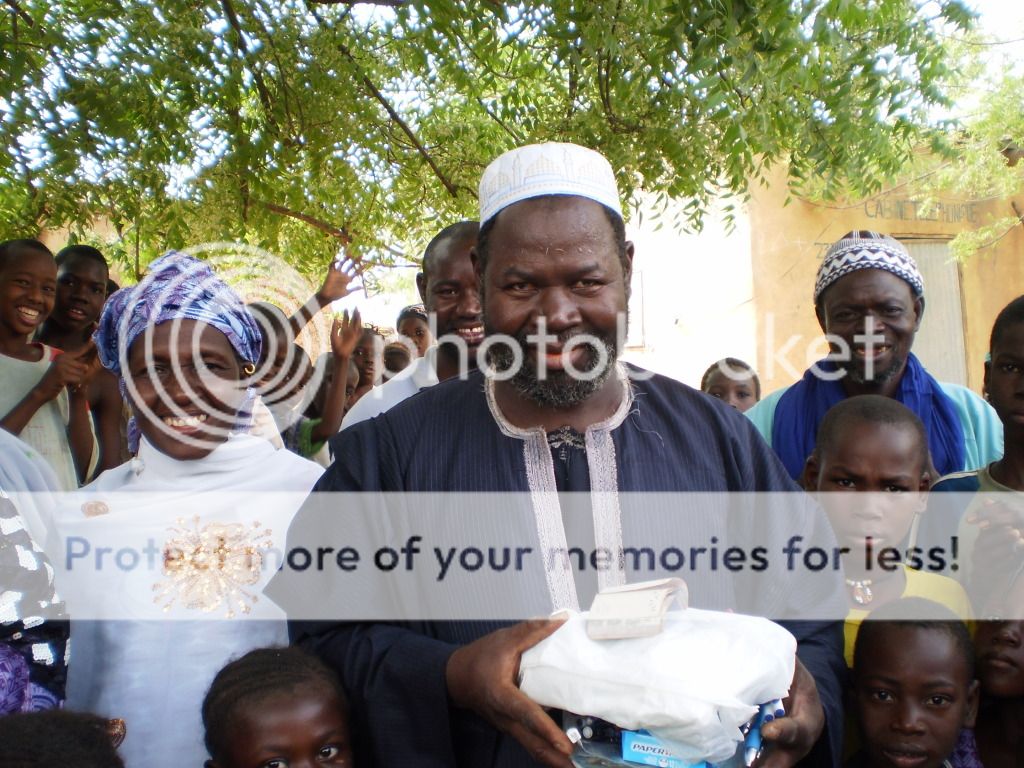
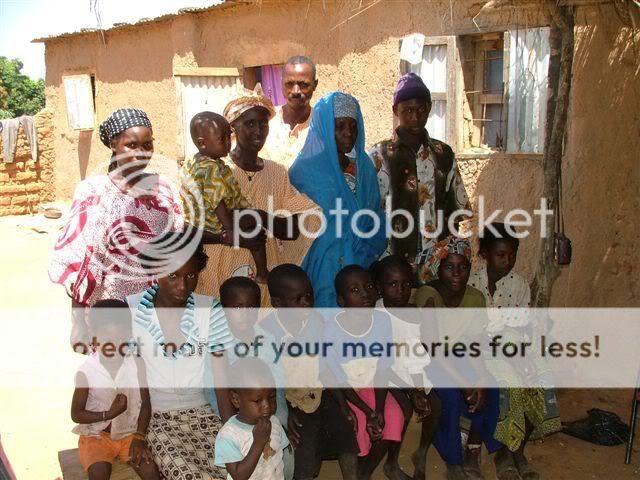
Village chief and family in central Mali, March 2009
A brief history
Any young child in Mali can recount for you the stories of Sundiata Keita, Mansa Moussa and many of the other legendary names of Malian past. The history of Mali is rich and proud, the location of the great empires of Mali, Ghana and Songhai. The peoples and ethnic groups that made up these empires still inhabit the area today, albeit sometimes spilling over into various neighboring countries due to borders drawn up by the French colonial powers.
One of the cities that was part of the Empire of Mali is the legendary Timbuktu, the mysterious city which has intrigued the outside world for centuries. Located at a strategic point intersecting trade routes from the Sahara and the Niger River, it grew from a small settlement into a center for commerce and education. One famous story recounts that when king Mansa Musa went on his pilgrimage to Mecca, he carried with him such wealth and spread around so much gold that it created inflation and destroyed the economy in Egypt and Saudi Arabia for the next decade. Upon his return, he built universities and mosques in Timbuktu and Djenne and the area became known for its Islamic scholarship as well as trade.
My own memories of Timbuktu are of quiet, dusty streets and cool, dark rooms protecting their inhabitants from the fiery midday sun. Visiting some of the collections of the ancient manuscripts, poring over the elegant Arabic script, drawings and mathematical notations. Sharing sweet strong shots of tea with a Tuareg artisan while we sat in his courtyard and watched him create magic from leather. The feel of fine grains of sand between my toes as we stood on a dune in the Sahara, looking out across the sea of sand and hearing the wind whistle around us. Buying fresh, hot flatbread made in outdoor clay ovens by Songhai women.
Mali and much of the rest of West Africa was later colonized by the French. Independence was not gained until 1960. One of the legacies of French colonialism was the inclusion of the Tuaregs of the south Sahara in the modern nation-state of Mali. Although there was consideration of splitting part of the northern territory away as a separate state, it was quickly realized that any northern state would need to include the Niger River in order to have a viable economy. The land around the Niger (including the cities of Timbuktu and Gao) was populated by a variety of ethnic groups such as the Songhai, Fulani, Bozo, with the Tuareg a distinct minority. These groups see themselves as Malian and would not have been amenable to being forced to separate and live in a Tuareg state.
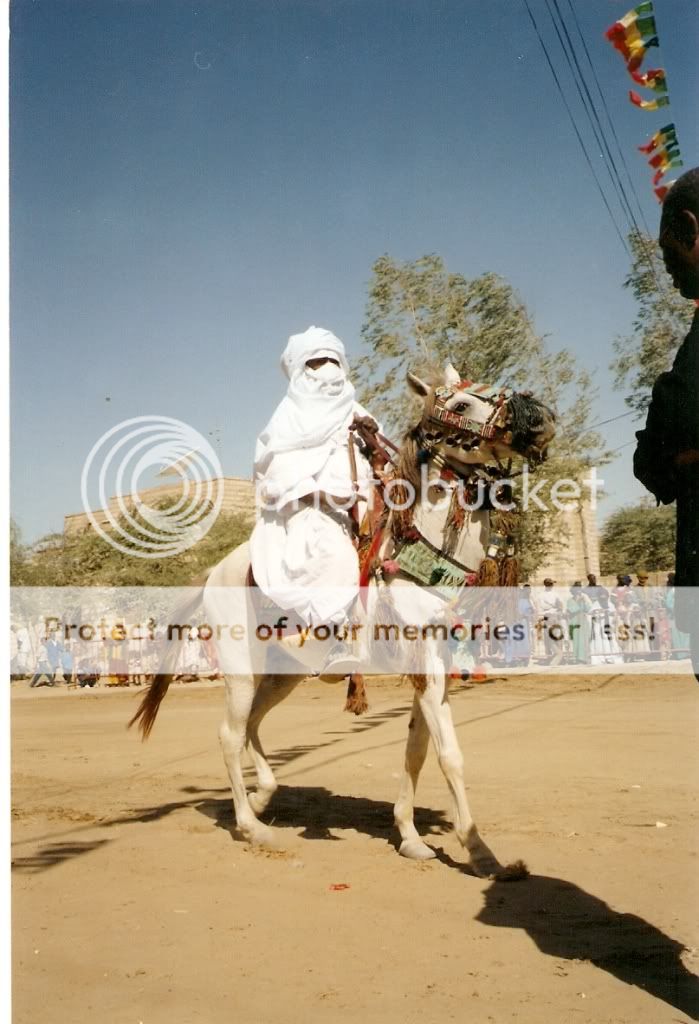
Tuareg rider in parade ceremony. Timbuktu, Dec. 2003
There has been tension ever since with Tuaregs wanting more autonomy and independence in the north, and Mali seeking to keep their territory intact. How one sees this tension depends very much on which side you come from. Southern Malians will say that they’ve given the Tuareg special consideration in terms of being promoted in the military ranks and having slots reserved in civil society jobs. Tuaregs will say that the part of the country where they live is neglected in terms of development (economic, medical, cultural, etc.) and that they want to be better represented in making decisions about the issues that affect them.Another factor that you won’t see mentioned in the news reports but which I have seen personally (on both sides) is that of race. Southern Malians would say that the Tuareg (who are related to the Berber of North Africa) think they’re better than them by virtue of their lighter skin. I know that when I lived there I was told several times by Tuaregs that they were like me, eg. white and that “we” were not like those “black people”. Sadly, the misunderstandings and stereotypes go both ways and are part of the undercurrents playing a part in where things stand today.
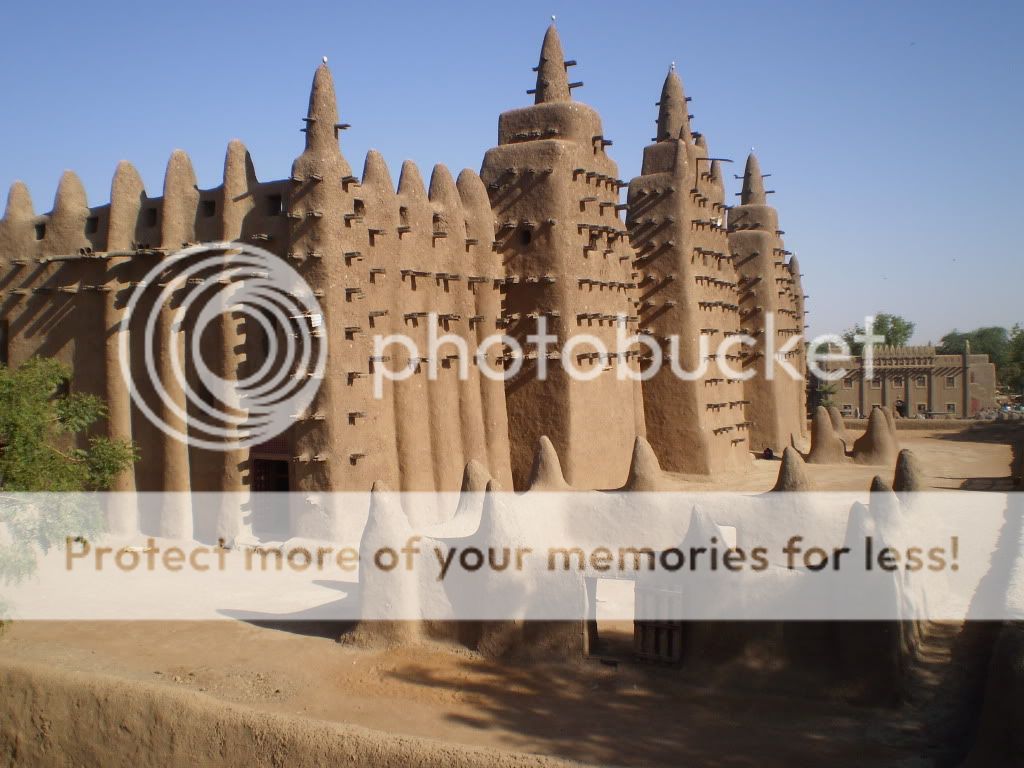
Famous mud mosque of Djenne. March, 2009
Mutiny in the capital and rebellion in the north
After the fall of Ghaddafi, a mass of Tuareg fighters migrated back to the Sahara region of Mali armed with weapons and ammunition. They rekindled the rebellion and are well-organized and well-armed. When they began attacking small settlements in the far north, the Malian army found itself under-equipped and outgunned. The Malian army suffered many defeats, and the President Amadou Toumani Toure (ATT) was accused of being “too soft” on the rebellion and of not giving the army the resources they need (food, manpower, ammunition).
On March 21, a visit from the defense minister to the troops garrisoned outside the capital of Bamako turned into a confrontation with angry soldiers protesting what they saw as incompetent leadership. This escalated into a mutiny and the soldiers stormed the presidential palace as well as the offices of the national television station. This junta of mid-level officers led by Captain Sanogo suspended the Constitution, saying that they would return the government to a democratically elected transition. Ironically, elections were due to be held in less than a month, and President ATT had made clear his intentions to step down and retire.
The capital city, Bamako. The presidential palace is the white building on the hill opposite the river. March, 2009
In the midst of this confusion in the capital, Tuareg rebel groups in the north took advantage to consolidate their positions and advance to capture more territory. Within three days time, they had captured the regional capitals of Kidal, Gao and Timbuktu and declared that they were “liberating” the country of Azawad.There are at least three distinct groups involved in the fighting as well as opportunistic criminal and bandit elements. Here is a brief (and overly simplistic) rundown. The MNLA is a collection of liberation-minded Tuareg groups who are seeking independence or at least more autonomy from Mali. Ansar Dine is another group whose goal is not Tuareg independence but the imposition of Islamic law in Mali. Finally, there is AQIM or Al Qaeda in the Islamic Maghreb which is associated with factions in Algeria and who make money from drug trafficking across the hostile desert terrain and kidnapping hostages for ransom. Reports indicate that the takeovers of Kidal, Gao and Timbuktu have been achieved by some or all of these groups working together. What remains to be seen is whether or not they will turn on one another now that their territorial objectives have been achieved. Reports from Timbuktu and Gao seem to indicate that in fact the Islamist elements have the upper hand.
Map of Mali
In the meantime, ECOWAS (the economic community of West African states) held emergency meetings to respond to the coup. ECOWAS took a very hard line with the junta, no tolerance for coups. They gave them 72 hours to return the country to constitutional rule. Sanogo announced a return to the original constitution (he and his mutineers had hastily drawn up a new constitution in the span of about a day), but refused to step down or to agree to a timeline for transition. ECOWAS instituted an embargo, closing the borders with Mali and freezing their ability to draw on the common West African currency, the CFA. Within the span of a few days, a deal was negotiated in which in which the speaker of Mali’s National Assembly, Dioncounda Traore, was sworn in as interim president. He has 40 days to organize elections. The most pressing issue is resolving the crisis in the north.Mali is one of the poorest countries in the world. The land in which most of the population lives is increasingly affected by desertification and the effects of global climate change. Already this year was forecast to be a bad one in terms of drought and food insecurity. The precarious security situation in the north has displaced thousands already and more will likely follow.
My Malian host family during Peace Corps training. Oct. 2005
The Mosaic of Mali
Almost all of the major ethnic groups in Mali have had their heros and their time of ascendancy. Bambara, Songhai, Soninke, Fulani, Mande, each can point to a time in the history and cite how their ancestors were great and made a real contribution to the shared patrimony of Mali. There is a fascinating practice that goes on to this day called “le cousinage” or “sanankuya” which in English is roughly translated as “joking cousins”. During my Peace Corps training, this was one of the first bits of culture that we learned and started to practice along with our budding language skills. Essentially each last name, ethnic group and/or caste is related to certain others as “joking cousins.” When you meet someone, perhaps sit beside them on the bus, buy something from them in the market, etc. one of the first questions asked will be “what’s your family name”. If it turns out that you and your interlocutor are joking cousins, you immediately begin trading good-natured insults and jokes. You’re no longer strangers; the ice is broken. We were told by our Malian trainers that they credited the long history of peace and diversity to this practice. By disarming potential rivalries through humor and giving a social outlet for acknowledging shared cultural history, serious fighting or feuds could be avoided.There are infinitely more small quirks like this this that one could share to demonstrate the Malian propensity towards dialogue, tolerance and optimism. I could tell you about the amazing musicians, known around the world for their artistry, talent, and ability to synthesize musical traditions across ethnic lines, or about the griots, oral historians who to this day can recount the entire histories of the clans to which they are traditionally linked, or the culturally ingrained practice of using mediators to smooth over disagreements in the community, or the traditional greetings and blessings that complete strangers exchange every day, or the way that passerbys are invited to share meals. I wish I could find the words to show clearly the Mali that I know and love and the degree to which this recent violence is so contrary to the norm.
The Malian people are generous and community minded. From the empire of Mali thousands of years ago to today, their culture and identity has remained intact. One can only hope that the values of dialogue and jiatigiya (hospitality) will see them through these dark days.
I hope that this diary has given at least a small glimpse at a situation that affects a country that is near and dear to my heart. I would be happy to take a stab at any questions or engage in discussion with anyone who is interested or curious.
Finally, I leave you with one of Mali’s most famous exports, music. Here we have artists from many of the major ethnic groups (including Tuareg) united in song and in celebration of their shared culture.
I can’t hit submit without forgetting to thank everyone at Black Kos for being so supportive, Denise Oliver Velez for encouraging me to take a stab at diarying this story, nomandates for getting me plugged into the New Diarists help network, and bent liberal for LOTS of editorial advice and patience. Aw ni ce, aw ni baara ji. Thank you!!
The following text appeared in the Internet magazine DAILY KOS, and was written by Mali Muso (which means ‘Woman from Mali’ in Bamanan, the predominant local language in Mali). I have tried by all means to get in touch with her to ask for her permission to reprint her text, as it summarizes the present situation in the country in an exemplary way, but have not succeeded in finding a way to get in touch with her. In view of the content of her story, I assume that she might not object. If any readers know how to contact her, I would be grateful.
When I received my invitation to join the Peace Corps in Mali in 2003, little did I know that my time in this corner of West Africa would change my life profoundly. My work with my Malian government colleagues in the tourism and handcraft development sector taught me not only about the incredibly rich history and culture of this great nation but also important lessons on the values of friendship, community and dialogue. I even found romance and my life partner. So my connections to this land and my interest in the recent events that have only just now started to pierce the consciousness of the mainstream media are quite deep.
I have never diaried at DKos before, but as the events in Mali began to take dramatic turns, I thought it might be worthwhile to share some of my own perspectives, reflections and analysis to bring a bit more detail to a news story that is probably pretty opaque and foreign for most. Please keep in mind that I’m not a historian, political scientist or journalist. I’ve done my best to do justice to the story, having read hundreds of news articles, tweets, and blogs, but I’m no expert. I may gloss over details or use shorthand that makes sense to me because of my closeness to the situation, so please feel free to call me out in the comments and engage in dialogue. All photos are mine. With that disclaimer, here goes:
Village chief and family in central Mali, March 2009
A brief history
Any young child in Mali can recount for you the stories of Sundiata Keita, Mansa Moussa and many of the other legendary names of Malian past. The history of Mali is rich and proud, the location of the great empires of Mali, Ghana and Songhai. The peoples and ethnic groups that made up these empires still inhabit the area today, albeit sometimes spilling over into various neighboring countries due to borders drawn up by the French colonial powers.
One of the cities that was part of the Empire of Mali is the legendary Timbuktu, the mysterious city which has intrigued the outside world for centuries. Located at a strategic point intersecting trade routes from the Sahara and the Niger River, it grew from a small settlement into a center for commerce and education. One famous story recounts that when king Mansa Musa went on his pilgrimage to Mecca, he carried with him such wealth and spread around so much gold that it created inflation and destroyed the economy in Egypt and Saudi Arabia for the next decade. Upon his return, he built universities and mosques in Timbuktu and Djenne and the area became known for its Islamic scholarship as well as trade.
My own memories of Timbuktu are of quiet, dusty streets and cool, dark rooms protecting their inhabitants from the fiery midday sun. Visiting some of the collections of the ancient manuscripts, poring over the elegant Arabic script, drawings and mathematical notations. Sharing sweet strong shots of tea with a Tuareg artisan while we sat in his courtyard and watched him create magic from leather. The feel of fine grains of sand between my toes as we stood on a dune in the Sahara, looking out across the sea of sand and hearing the wind whistle around us. Buying fresh, hot flatbread made in outdoor clay ovens by Songhai women.
Mali and much of the rest of West Africa was later colonized by the French. Independence was not gained until 1960. One of the legacies of French colonialism was the inclusion of the Tuaregs of the south Sahara in the modern nation-state of Mali. Although there was consideration of splitting part of the northern territory away as a separate state, it was quickly realized that any northern state would need to include the Niger River in order to have a viable economy. The land around the Niger (including the cities of Timbuktu and Gao) was populated by a variety of ethnic groups such as the Songhai, Fulani, Bozo, with the Tuareg a distinct minority. These groups see themselves as Malian and would not have been amenable to being forced to separate and live in a Tuareg state.
Tuareg rider in parade ceremony. Timbuktu, Dec. 2003
There has been tension ever since with Tuaregs wanting more autonomy and independence in the north, and Mali seeking to keep their territory intact. How one sees this tension depends very much on which side you come from. Southern Malians will say that they’ve given the Tuareg special consideration in terms of being promoted in the military ranks and having slots reserved in civil society jobs. Tuaregs will say that the part of the country where they live is neglected in terms of development (economic, medical, cultural, etc.) and that they want to be better represented in making decisions about the issues that affect them.Another factor that you won’t see mentioned in the news reports but which I have seen personally (on both sides) is that of race. Southern Malians would say that the Tuareg (who are related to the Berber of North Africa) think they’re better than them by virtue of their lighter skin. I know that when I lived there I was told several times by Tuaregs that they were like me, eg. white and that “we” were not like those “black people”. Sadly, the misunderstandings and stereotypes go both ways and are part of the undercurrents playing a part in where things stand today.
Famous mud mosque of Djenne. March, 2009
Mutiny in the capital and rebellion in the north
After the fall of Ghaddafi, a mass of Tuareg fighters migrated back to the Sahara region of Mali armed with weapons and ammunition. They rekindled the rebellion and are well-organized and well-armed. When they began attacking small settlements in the far north, the Malian army found itself under-equipped and outgunned. The Malian army suffered many defeats, and the President Amadou Toumani Toure (ATT) was accused of being “too soft” on the rebellion and of not giving the army the resources they need (food, manpower, ammunition).
On March 21, a visit from the defense minister to the troops garrisoned outside the capital of Bamako turned into a confrontation with angry soldiers protesting what they saw as incompetent leadership. This escalated into a mutiny and the soldiers stormed the presidential palace as well as the offices of the national television station. This junta of mid-level officers led by Captain Sanogo suspended the Constitution, saying that they would return the government to a democratically elected transition. Ironically, elections were due to be held in less than a month, and President ATT had made clear his intentions to step down and retire.
The capital city, Bamako. The presidential palace is the white building on the hill opposite the river. March, 2009
In the midst of this confusion in the capital, Tuareg rebel groups in the north took advantage to consolidate their positions and advance to capture more territory. Within three days time, they had captured the regional capitals of Kidal, Gao and Timbuktu and declared that they were “liberating” the country of Azawad.There are at least three distinct groups involved in the fighting as well as opportunistic criminal and bandit elements. Here is a brief (and overly simplistic) rundown. The MNLA is a collection of liberation-minded Tuareg groups who are seeking independence or at least more autonomy from Mali. Ansar Dine is another group whose goal is not Tuareg independence but the imposition of Islamic law in Mali. Finally, there is AQIM or Al Qaeda in the Islamic Maghreb which is associated with factions in Algeria and who make money from drug trafficking across the hostile desert terrain and kidnapping hostages for ransom. Reports indicate that the takeovers of Kidal, Gao and Timbuktu have been achieved by some or all of these groups working together. What remains to be seen is whether or not they will turn on one another now that their territorial objectives have been achieved. Reports from Timbuktu and Gao seem to indicate that in fact the Islamist elements have the upper hand.
Map of Mali
In the meantime, ECOWAS (the economic community of West African states) held emergency meetings to respond to the coup. ECOWAS took a very hard line with the junta, no tolerance for coups. They gave them 72 hours to return the country to constitutional rule. Sanogo announced a return to the original constitution (he and his mutineers had hastily drawn up a new constitution in the span of about a day), but refused to step down or to agree to a timeline for transition. ECOWAS instituted an embargo, closing the borders with Mali and freezing their ability to draw on the common West African currency, the CFA. Within the span of a few days, a deal was negotiated in which in which the speaker of Mali’s National Assembly, Dioncounda Traore, was sworn in as interim president. He has 40 days to organize elections. The most pressing issue is resolving the crisis in the north.Mali is one of the poorest countries in the world. The land in which most of the population lives is increasingly affected by desertification and the effects of global climate change. Already this year was forecast to be a bad one in terms of drought and food insecurity. The precarious security situation in the north has displaced thousands already and more will likely follow.
My Malian host family during Peace Corps training. Oct. 2005
The Mosaic of Mali
Almost all of the major ethnic groups in Mali have had their heros and their time of ascendancy. Bambara, Songhai, Soninke, Fulani, Mande, each can point to a time in the history and cite how their ancestors were great and made a real contribution to the shared patrimony of Mali. There is a fascinating practice that goes on to this day called “le cousinage” or “sanankuya” which in English is roughly translated as “joking cousins”. During my Peace Corps training, this was one of the first bits of culture that we learned and started to practice along with our budding language skills. Essentially each last name, ethnic group and/or caste is related to certain others as “joking cousins.” When you meet someone, perhaps sit beside them on the bus, buy something from them in the market, etc. one of the first questions asked will be “what’s your family name”. If it turns out that you and your interlocutor are joking cousins, you immediately begin trading good-natured insults and jokes. You’re no longer strangers; the ice is broken. We were told by our Malian trainers that they credited the long history of peace and diversity to this practice. By disarming potential rivalries through humor and giving a social outlet for acknowledging shared cultural history, serious fighting or feuds could be avoided.There are infinitely more small quirks like this this that one could share to demonstrate the Malian propensity towards dialogue, tolerance and optimism. I could tell you about the amazing musicians, known around the world for their artistry, talent, and ability to synthesize musical traditions across ethnic lines, or about the griots, oral historians who to this day can recount the entire histories of the clans to which they are traditionally linked, or the culturally ingrained practice of using mediators to smooth over disagreements in the community, or the traditional greetings and blessings that complete strangers exchange every day, or the way that passerbys are invited to share meals. I wish I could find the words to show clearly the Mali that I know and love and the degree to which this recent violence is so contrary to the norm.
The Malian people are generous and community minded. From the empire of Mali thousands of years ago to today, their culture and identity has remained intact. One can only hope that the values of dialogue and jiatigiya (hospitality) will see them through these dark days.
I hope that this diary has given at least a small glimpse at a situation that affects a country that is near and dear to my heart. I would be happy to take a stab at any questions or engage in discussion with anyone who is interested or curious.
Finally, I leave you with one of Mali’s most famous exports, music. Here we have artists from many of the major ethnic groups (including Tuareg) united in song and in celebration of their shared culture.
I can’t hit submit without forgetting to thank everyone at Black Kos for being so supportive, Denise Oliver Velez for encouraging me to take a stab at diarying this story, nomandates for getting me plugged into the New Diarists help network, and bent liberal for LOTS of editorial advice and patience. Aw ni ce, aw ni baara ji. Thank you!!
Misschien was het niet eens een geplande staatsgreep, maar begon het gewoon met een aantal morrende soldaten die hun stem op radio en televisie wilde laten horen, dus namen ze het zendstation in en dachten toen misschien: oh, als we hier nu toch zijn en omdat het zo makkelijk was, waarom niet meteen het hele land overnemen?… Het is te vermoeden dat zo’n ‘muiterij’ (want dat was het – niets anders) aanvankelijk op heel wat sympathie kon rekenen, omdat het ongenoegen in de maatschappij wijd verbreid was. (Om ongekende redenen, overigens, want het beleid van de president, ATT, heeft Mali alleen maar vooruitgang gebracht.)
In de figuren hieronder is duidelijk te zien hoe Mali de voorbije 20 jaar enorme vooruitgang heeft geboekt in alle vier onderzochte aspecten sinds de 70-er jaren van vorige eeuw. (De tabellen komen van Freedom House, een onafhankelijk centrum dat democratische vrijheden, zoals persvrijheid, onafhankelijkheid van de media, burgerrechten, enz. in alle landen van de wereld onderzoekt.)
In elk van de grafieken betekent een cijfer 1 volledige democratische vrijheid, het cijfer 7 de grootste on-vrijheid – of helemaal geen democratische vrijheden. Zoals je kunt zien, is Mali een model-democratie. Bovendien toont de laatste grafiek dat het BNP van Mali sinds 1990 stabiel gegroeid is met zo’n 5 {e9940e0c02f8d96d21e6f25569fda7b5198e19dfa9031a0585a9ae16fa7c9142} per jaar. Samen met de politieke stabiliteit was dit een garantie voor een langzame maar zekere toename in de levenskwaliteit van de gewone mensen. “It all looked so very good, and now it’s all gone so very wrong” schrijft Duncan, en het is moeilijk om het hier niet mee eens te zijn!
Op korte termijn heeft de staatsgreep precies dat gebracht wat de muiters zeiden te willen vermijden: het machtsvacuum dat ze gecreëerd hebben, was een godsgeschenk voor de Toeareg rebellen in het noorden van het land – volgens de putchisten had ATT, de president, die opstand niet hard genoeg aangepakt. Maar door die staatsgreep konden die Toeareg zonder veel moeite het hele noordelijke gebied veroveren: er was geen centraal gezag meer, en de soldaten van het Malinese leger, dat al niets voorstelt, wisten niet meer wat ze moesten doen. Velen hebben gewoon hun uniform uitgetrokken…
Op langere termijn, en dat is nog het ergste, is het geloof in democratische instituties behoorlijk ondergraven, als het al niet helemaal vernietigd is. We zijn weer in de Afrikaanse situatie beland, waarin de macht van een Kalashnikov sterker is dan de wet of dan onafhankelijke sociale instituties voor machts-deling. De sympathie die menigeen voor de afvallige muiters gehad mag hebben, zal niet meer stand houden wanneer de Malinezen zich de gevolgen van hun staatsgreep gaan relaiseren.An article by Felicitas Duncan on Moneyweb (see: http://www.moneyweb.co.za/mw/view/mw/en/page497799?oid=565279&sn=2009+Detail) is called “Dammit Mali” and that indeed renders the feelings of all who cared about the country (or Africa in general) extremely well:
“Mali was, until recently, one of Africa’s great success stories – a free democracy, poor, but liberal and concerned about the well-being of its people, with solidly democratic political institutions and a promising future. Now, however, the legitimately elected government of president Amadou Touré has been overthrown in a violent coup d’etat by army officers, who say that the government has been inept in fighting the Tuareg insurgency in northern Mali.” Maybe the whole thing was not a planned coup, but started with grumbling soldiers, who wanted to have their voice heard on radio and television, so took over the broadcasting station, and then may have thought, oh well, since it was so easy, and now that we are here, why to take over the country as a whole. I presume that such a mutiny may initially have had the sympathy of large groups in society, who were also disgruntled at the way
In the tables below, taken from Freedom House, an independent research centrum in New York (and quoted in Duncan’s article) it can be seen how Mali made an enormous progress in all four aspects since the 1970s. Freedom House researches aspects like freedom of press and expression, freedom of the media, the observance of civil liberties, etcetera. In the graphs below, a number 1 signifies democratic freedom, the number 7 about the worse it can get, hence no freedom at all. As can be seen, Mali is really a model democracy. Above that, as the final graph shows, GDP has been stable since the 1990 at roughly 5 {e9940e0c02f8d96d21e6f25569fda7b5198e19dfa9031a0585a9ae16fa7c9142} annual growth. That, together with political stability, was a guarantee for slow but steady increase in the quality of life of Malian people. “It all looked so very good, and now it’s all gone so very wrong” writes Duncan, and one could not agree more.
In the short term, the coup has aggravated the situation the mutineers said they would remedy: the power vacuum they have created has been welcomed immediately by the Tuareg rebels in the North, which the government of ATT is said not to have taken on decisively enough. Now, however, those rebels can take any town in the North they want, as the army collapses in the wake of their mutiny: whom do soldiers have to obey? The central command has disappeared and the coup officers’ influence does not seem to reach into the North, where the fighting is going on.
In the longer run, and what is perhaps worse, is that belief in the democratic institutions has been destroyed, if not severely damaged. Once again we see that in Africa the power of a Kalashnikov is stronger than the law or independent institutions to share power. Any sympathy the renegade soldiers may have had in Mali’s (growing) middle class, will by now have dwindled.